


Zibo Huayan Industrial Ceramics Co., Ltd. is located in Zibo City, Shandong Province. Founded in 1986, it is a high-tech enterprise specializing in the production of alumina ceramics.", with 7 product patents, and it is well-known in the industry.
The company covers an area of 32,000 square meters, including 13,000 square meters of construction area; more than 200 employees, including 36 professional and technical personnel, is a member of the National Industrial Ceramics Standards Committee, and has passed the ISO9001: 2000 international quality management system certification.
The company currently has an annual output of 900,000 ceramic roller production lines. The main products are ceramic roller, alumina ball and lining brick.
Why choose us?
Experience
Established in 1986, it has more than 40 years experience in alumina ceramic roller industry.
Production
With the 3 Germany's most advanced automatic shuttle kilns, 3 automatic production and processing lines.
Quality
ISO9001:2000 Quality Management System.
Service
Fast after-sales service and provide solutions.
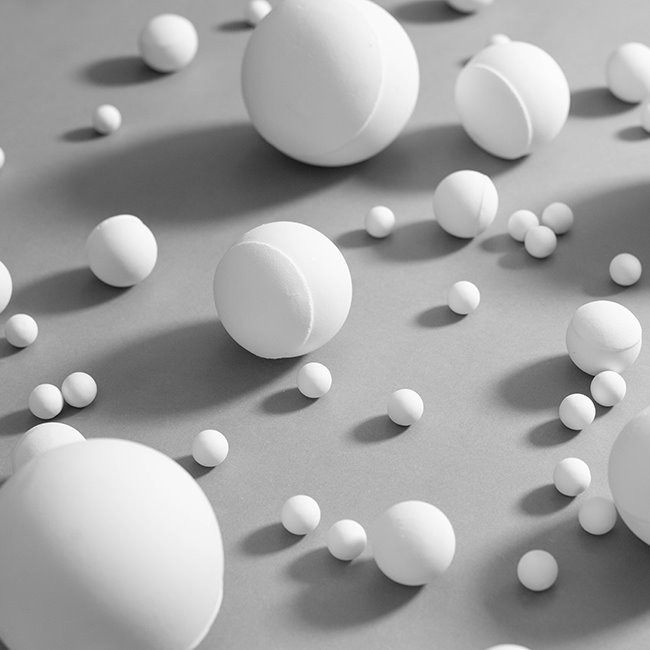
Microcrystalline alumina balls are made of selected high-quality raw materials, advanced molding technology, and high-quality grinding media calcined in high-temperature tunnel kilns.

Alumina ball stone is the grinding body of fine grinding equipment such as ball mill, pot mill and vibration mill. It has the advantages of high hardness, good toughness, high density and corrosion resistance.

The wear resistance of alumina balls is higher than that of ordinary alumina balls. When it works, the ball does not contaminate the abrasive material, so it can maintain the purity and improve the stability of the abrasive material, especially ceramics.

75% Alumina ball stone is the grinding body of fine grinding equipment such as ball mill, pot mill and vibration mill.
Benefits of Alumina Grinding Ball
Long lasting
Aluminum oxide grinding balls are very durable and have a long service life. This is because they are highly resistant to wear and tear, ensuring that they are not easily damaged. Additionally, they can withstand high temperatures and corrosive environments, making them ideal for use in extreme conditions.
Excellent grinding performance
Alumina grinding balls have superior grinding performance compared to other types of grinding media. This is because they have a high density, which allows them to grind materials efficiently while minimizing energy consumption. They are also less contaminating, providing a high-quality end product.
Wide range of applications
Alumina grinding balls are widely used in different industries. They are commonly used in the ceramics, mining, and chemical industries, among others. In the ceramic industry, they are used to grind raw materials into fine powders. In the mining industry, they are used to grind ore, thereby extracting valuable minerals. In the chemical industry, they are used to make pigments, coatings, and other products.
Environmental friendly
Alumina grinding balls are environmentally friendly. This is because they are made from natural materials and are recyclable. They also provide a viable alternative to other types of grinding media, such as steel balls, which can cause significant environmental damage due to their high carbon footprint.

Alumina grinding balls refer to materials such as bauxite, roller powder, industrial alumina powder, high-temperature calcined alpha alumina powder, etc. , firing and other processes, mainly as a ball stone widely used as a grinding medium. According to different alumina content, it can be divided into medium alumina ball, medium high alumina ball and high alumina ball.
Generally, we classify 60%-65% alumina content as medium-alumina balls, 75%-80% alumina content as medium-high alumina balls, and 90% or more alumina content as high-alumina balls. Among them, high alumina balls are subdivided into 90 porcelain, 92 porcelain, 95 porcelain and 99 porcelain. Due to its extremely high production cost, 99 porcelain is rarely produced in large quantities by large manufacturers. At present, it is mainly made by hand in some special ceramic factories.
Application of Alumina Grinding Ball
Alumina grinding balls are made of high-purity alumina powder by isostatic pressing and high-temperature sintering. The density of 92 alumina ball is about 3.6, the Mohs hardness is 9, the water absorption rate is close to 0, and the self-wear is 0.01%. It is precisely because of the above characteristics that alumina grinding balls are widely used in fine grinding in various industries.
Firstly, is the application of alumina ceramic grinding balls in quartz grinding. The hardness of quartz is also very high, especially the high white quartz with high whiteness requirements, and the color of alumina is also very white. This solves the grinding problem of high white quartz from various aspects and can reduce the pollution of quartz during grinding.
Then, the grinding of alumina ceramic grinding balls in the glass. The hardness of glass is very high, and ordinary grinding media have limited ability to process it. Excessive impurities will greatly reduce the quality of the glass, resulting in poor quality of finished glass and inability to produce high-quality products. Alumina ceramic grinding balls can solve this problem very well.
Next, high alumina grinding balls can be used in lithium battery grinding. This is an emerging industry, and alumina ceramic grinding balls can show their charm through their own materials. We know that lithium battery materials are very sensitive to iron, so metal abrasive bonding is really not available. But in non-metallic grinding media, the efficiency of alumina grinding balls is very high. So it has become a very good alternative abrasive material.
Finally, grinding in cement grinding. Now the ceramic industry has developed into a more popular industry in recent years. Alumina grinding balls feature very low wear, thermal conductivity, and low density. So it has good performance in the two-stage grinding of cement mill. Especially in energy saving and consumption reduction, the effect of improving product quality is more obvious.
Alumina Grinding Ball Grinding Mechanism And Its Performance Characteristics
The mechanism of alumina grinding balls
Alumina grinding balls are made of high-quality alumina powder and formed by pressing or rolling. Alumina grinding balls are usually placed in grinding machines as wear-resistant materials. The ball rolls and slides along the surface of the material, constantly applying pressure to reduce the size of the material. This grinding mechanism ensures consistent particle size distribution and increases overall efficiency.
Performance characteristics of alumina grinding balls
High density: Alumina grinding balls have high density so that they will not deform or break when used in large quantities.
Wear resistance: Alumina grinding balls have excellent wear resistance. They can be used for extended periods without showing any visible signs of wear, making them ideal for longer machining processes.
Chemically inert: Alumina grinding balls are chemically inert, making them ideal for grinding applications where contamination is undesirable. They are highly resistant to acids, bases, and other chemicals, making them the material of choice in many industries.
High-temperature resistance: Alumina grinding balls can withstand high temperatures and are suitable for use in grinders operating at high temperatures.
Ingredients alumina grinding balls are made of alumina, which has the characteristics of high strength, hardness, and good wear resistance. The steel ball, as the name suggests, is made of steel. Although steel also has high hardness, it is far inferior to alumina grinding balls.
Service life alumina grinding balls have high hardness and naturally have strong wear resistance. When grinding materials, alumina grinding balls will continuously impact them. Steel balls are more likely to deform due to hardness issues, so their lifespan is not as good as alumina grinding balls.
Contamination of materials because the alumina grinding balls are inert and of high purity, they will not chemically react with the grinding materials. The steel balls will be doped with other impurities, and these impurities will easily react with the grinding materials, thereby contaminating the materials.
Density alumina grinding balls have a higher density than steel balls. This means that a ceramic ball of the same volume will be heavier than a steel ball of the same volume. Therefore, ceramic balls can provide higher grinding efficiency compared to steel balls.

How to Clean the Alumina Grinding Ball
Safety first
Before initiating the cleaning process, prioritize safety. Ensure that all necessary personal protective equipment (PPE) is worn, including gloves, safety goggles, and appropriate clothing. This step is crucial to prevent any potential accidents or exposure to hazardous materials.
Gentle removal of surface contaminants
Begin by gently removing surface contaminants from the ceramic alumina balls. Use a soft cloth or brush to sweep away loose particles and dust. Avoid using abrasive materials that could scratch or damage the surface of the balls.
Preparation of cleaning solution
Prepare a cleaning solution by mixing a mild detergent with warm water. The detergent should be selected based on its compatibility with ceramic materials. Consult with our experts at Sanxin New Materials Co., Ltd. for recommendations on suitable detergents.
Submergence and soaking
Place the ceramic alumina balls in the prepared cleaning solution. Allow them to soak for a designated period, typically around 30 minutes to an hour. This soaking process will help to loosen and dissolve stubborn contaminants.
Gentle scrubbing
After soaking, use a soft brush or cloth to gently scrub the surface of the balls. Ensure that the scrubbing action is gentle and not abrasive to avoid causing damage.
Rinsing and drying
Thoroughly rinse the ceramic alumina balls with clean water to remove any remaining detergent or contaminants. After rinsing, allow the balls to air-dry in a clean and dust-free environment.
Final inspection
Before reintegrating the ceramic alumina balls into your industrial process, conduct a final inspection. Ensure that the balls are free from visible contaminants and damage. Any compromised balls should be replaced to maintain optimal performance.

Things to Note When Using Alumina Grinding Balls in Ball Mills
Alumina grinding balls are a grinding media widely used in industrial production. They are popular because of their high hardness, good wear resistance, and strong chemical stability. However, when using alumina grinding balls, you also need to pay attention to the following matters:
First of all, newly purchased alumina grinding balls should be cleaned and disinfected before use to ensure the cleanliness and hygienic safety of their surfaces. At the same time, you also need to pay attention to moisture-proof, dust-proof, anti-pollution and other issues, and keep the grinding balls dry and clean as much as possible.
Secondly, when the grinder uses alumina grinding balls, the grinding conditions need to be adjusted and controlled according to different process requirements and actual conditions, such as rotation speed, material-to-liquid ratio, grinding time, grinding media ratio, etc. Problems such as poor grinding effect, serious wear, and reduced product quality due to improper grinding conditions should be avoided.
In addition, you also need to pay attention to safety issues, such as wearing protective gloves, goggles and other protective equipment during processing to prevent accidental injuries. Be careful when adding and removing grinding balls to avoid the grinding balls from overflowing or slipping out of the container.
How to Choose the Right Alumina Grinding Ball
Select the material of grinding balls.
Material selection takes into account the density, hardness and chemical properties of the material to be ground.
Generally speaking, you must choose a alumina grinding ball with a larger density and hardness than the raw material to achieve the grinding effect.
In addition, when the ball mill is working, a large amount of heat is generated in the ball mill due to friction and collision. Therefore, it is necessary to select a alumina grinding ball with good thermal stability and ensure that it does not react physically or chemically with the material to be ground to avoid contamination of the sample.
Size selection.
The alumina grinding balls perform different functions depending on the size of the sphere.
The large ball has a large weight and has a strong impact on the material. It is easy to crush the material, but it is difficult to grind and easily produces dead corners.
The small ball is small in size and has many collisions, so it has a strong grinding effect on small materials, but its impact force is small, making it more difficult to grind large materials. Therefore, in order to ensure sufficient crushing and grinding of raw materials, alumina grinding balls of different sizes need to be added at the same time.
Quantity ratio.
Because large and small balls have different functions, the number must be reasonably allocated. First, calculate the surface area according to the diameter of different alumina grinding balls, and then make the total surface area of different alumina grinding balls roughly equal.
Filling space ratio.
During the ball milling process, we must obtain a certain space in the ball mill water tank to function effectively, so it cannot be too full. In addition, in order to achieve good ball milling results, it is recommended that the mass ratio of alumina grinding balls and raw materials be kept between 0.9 and 1.1.
Our Factory
The company covers an area of 32,000 square meters, including 13,000 square meters of construction area; more than 200 employees, including 36 professional and technical personnel, is a member of the National Industrial Ceramics Standards Committee, and has passed the ISO9001: 2000 international quality management system certification.
The company currently has an annual output of 900,000 ceramic roller production lines. The main products are ceramic roller, alumina ball and lining brick.


Certifications


FAQ
Q: What is the primary function of alumina grinding balls in industrial applications?
Q: What are the common materials used in the manufacturing of alumina grinding balls?
Q: What is the hardness of alumina grinding balls, and how does it affect their performance?
Q: How do alumina grinding balls affect the energy consumption of ball milling operations?
Q: What factors determine the appropriate size of alumina grinding balls for a given application?
Q: What is the typical density of alumina grinding balls, and why is this important?
Q: How do alumina grinding balls perform in wet grinding applications compared to dry grinding?
Q: Can alumina grinding balls be used in ball mills of different designs?
Q: What measures can be taken to maximize the longevity of alumina grinding balls?
Q: How does the purity level of alumina grinding balls affect their performance?
Q: What environmental considerations are associated with the use of alumina grinding balls?
Q: What are the economic benefits of using alumina grinding balls in ball milling operations?
Q: How do alumina grinding balls affect the final quality of the product in ball milling processes?
Q: Can alumina grinding balls be reused or recycled after their useful life?
Q: How do alumina grinding balls compare to steel balls in terms of wear rate?
Q: What are the typical applications of alumina grinding balls in the ceramics industry?
Q: How do alumina grinding balls affect the noise levels in ball milling operations?
Q: What impact do alumina grinding balls have on the thermal stability of the milling process?
Q: Can alumina grinding balls be used in corrosive environments?
Q: How do alumina grinding balls affect the energy efficiency of ball milling equipment?
Hot Tags: microcrystalline alumina ball, China microcrystalline alumina ball manufacturers, suppliers, factory


