


Ceramic fiber is a remarkable material known for its excellent thermal insulation properties and resistance to high temperatures. In many industrial applications, corrosion resistance is also a crucial factor, and ceramic fiber excels in this aspect as well. As a leading ceramic fiber supplier, I am often asked about how ceramic fiber resists corrosion. In this blog post, I will delve into the mechanisms behind ceramic fiber's corrosion resistance and explore its implications for various industries.
Composition and Structure of Ceramic Fiber
To understand how ceramic fiber resists corrosion, we first need to look at its composition and structure. Ceramic fibers are typically made from alumina (Al₂O₃), silica (SiO₂), and other metal oxides. These components are carefully selected and processed to form a fibrous structure with high surface area and porosity.
The high alumina and silica content in ceramic fiber contributes to its chemical stability. Alumina is known for its excellent resistance to chemical attack, especially in acidic and alkaline environments. Silica, on the other hand, forms a protective layer on the surface of the fiber, preventing the penetration of corrosive agents.
The fibrous structure of ceramic fiber also plays a crucial role in its corrosion resistance. The fibers are randomly oriented, creating a tortuous path for corrosive agents to penetrate. This reduces the effective contact area between the fiber and the corrosive environment, slowing down the corrosion process.
Resistance to Chemical Corrosion
One of the main advantages of ceramic fiber is its resistance to a wide range of chemical substances. It can withstand exposure to acids, alkalis, and organic solvents without significant degradation. This makes it an ideal material for applications in chemical processing, petrochemical, and pharmaceutical industries.
In acidic environments, ceramic fiber's high alumina content provides excellent resistance to corrosion. Alumina reacts with acids to form stable aluminum salts, which act as a protective layer on the surface of the fiber. This layer prevents further reaction between the fiber and the acid, ensuring the long-term stability of the material.

Similarly, in alkaline environments, ceramic fiber's silica content plays a key role in its corrosion resistance. Silica reacts with alkalis to form silicates, which also provide a protective layer on the fiber surface. This layer inhibits the diffusion of hydroxide ions, reducing the rate of corrosion.
In addition to acids and alkalis, ceramic fiber is also resistant to many organic solvents. This is due to its non-polar nature and the absence of reactive functional groups on its surface. As a result, it can be used in applications where contact with organic solvents is inevitable, such as in paint and coating production and solvent recovery systems.
Resistance to Oxidation and Thermal Corrosion
Another important aspect of ceramic fiber's corrosion resistance is its ability to withstand oxidation and thermal corrosion at high temperatures. In many industrial processes, materials are exposed to high temperatures in the presence of oxygen, which can cause rapid oxidation and degradation.
Ceramic fiber's high melting point and low thermal conductivity make it highly resistant to oxidation. At high temperatures, the surface of the fiber forms a thin layer of oxide, which acts as a barrier to further oxidation. This layer is self-healing, meaning that if it is damaged, it can reform quickly to protect the underlying fiber.
In addition to oxidation resistance, ceramic fiber also exhibits excellent thermal corrosion resistance. Thermal corrosion occurs when materials are exposed to high temperatures in the presence of corrosive gases, such as sulfur dioxide and chlorine. Ceramic fiber's chemical stability and the protective oxide layer on its surface make it resistant to these corrosive gases, ensuring its performance in harsh thermal environments.
Applications of Corrosion-Resistant Ceramic Fiber
The corrosion resistance of ceramic fiber makes it suitable for a wide range of applications in various industries. Here are some examples:
- Chemical Processing Industry: Ceramic fiber is used in chemical reactors, distillation columns, and storage tanks to provide thermal insulation and corrosion protection. Its resistance to acids, alkalis, and organic solvents ensures the long-term stability of these equipment.
- Petrochemical Industry: In refineries and petrochemical plants, ceramic fiber is used in furnaces, heaters, and pipelines to withstand high temperatures and corrosive environments. Its ability to resist oxidation and thermal corrosion makes it an ideal material for these applications.
- Power Generation Industry: Ceramic fiber is used in power plants, both in traditional fossil fuel power plants and in renewable energy systems such as solar and geothermal power plants. It provides thermal insulation and corrosion protection for boilers, turbines, and other equipment.
- Aerospace Industry: In the aerospace industry, ceramic fiber is used in aircraft engines, heat shields, and other components to withstand high temperatures and corrosive environments. Its lightweight and high strength make it an attractive material for aerospace applications.
Our Ceramic Fiber Products
As a ceramic fiber supplier, we offer a wide range of corrosion-resistant ceramic fiber products to meet the diverse needs of our customers. Our products include Ceramic Fiber Hydrophobic Board, Ceramic Fiber Semi-rigid Board, and Ceramic Fiber Shaped Parts.
Our Ceramic Fiber Hydrophobic Board is specially designed to resist moisture and water penetration, making it suitable for applications in humid environments. It has excellent thermal insulation properties and can withstand high temperatures without losing its hydrophobicity.
Our Ceramic Fiber Semi-rigid Board combines the flexibility of ceramic fiber with the rigidity of a board. It is easy to install and provides excellent thermal insulation and corrosion protection. It is widely used in industrial furnaces, kilns, and other high-temperature applications.
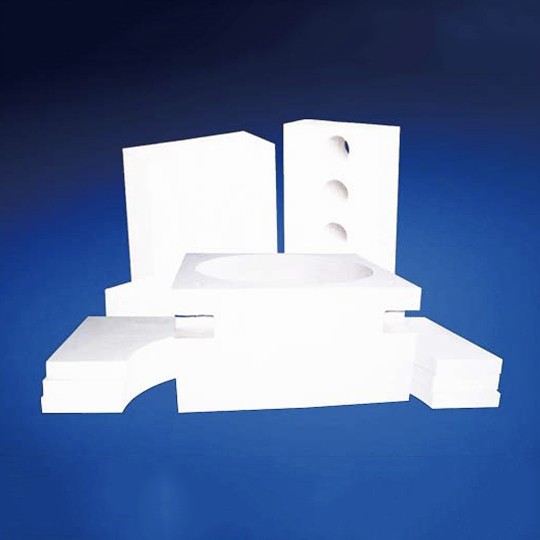
Our Ceramic Fiber Shaped Parts are custom-made to meet the specific requirements of our customers. They can be used in a variety of applications, such as in heat exchangers, catalysts, and filtration systems. Our shaped parts are made from high-quality ceramic fiber materials and are designed to provide excellent corrosion resistance and thermal performance.
Contact Us for Procurement
If you are looking for high-quality corrosion-resistant ceramic fiber products for your industrial applications, we would be happy to assist you. Our team of experts can provide you with detailed information about our products, including their specifications, performance, and applications. We can also offer customized solutions to meet your specific requirements.
Please feel free to contact us to discuss your procurement needs. We look forward to working with you to provide the best ceramic fiber solutions for your business.
References
- Schneider, Z. (2018). Ceramic Fibers: Properties, Manufacturing, and Applications. CRC Press.
- Zhang, Y., & Li, H. (2020). Corrosion Resistance of Ceramic Fibers in Harsh Environments. Journal of Materials Science and Technology, 36(10), 1927-1934.
- Wang, J., & Chen, G. (2019). Advances in Ceramic Fiber Technology for High-Temperature and Corrosive Applications. Progress in Materials Science, 103, 100623.


