


In the industrial arena, ceramic fiber products have emerged as indispensable materials due to their remarkable thermal insulation, chemical stability, and mechanical properties. As a dedicated ceramic fiber supplier, I understand the significance of adhering to strict standards to ensure the quality and performance of these products. In this blog, I will delve into the key standards that govern ceramic fiber products, shedding light on the factors that make them reliable and effective solutions for various applications.

Chemical Composition
The chemical composition of ceramic fiber products is a fundamental determinant of their properties and performance. These products are primarily composed of alumina (Al₂O₃) and silica (SiO₂), with varying ratios depending on the specific type and application. For instance, high - alumina ceramic fibers typically contain a higher proportion of alumina, which enhances their high - temperature resistance.
The purity of the raw materials used in the production of ceramic fibers is crucial. Impurities such as iron, alkali metals, and other trace elements can significantly affect the fiber's thermal stability and chemical resistance. Industry standards often specify the maximum allowable levels of these impurities to ensure consistent quality. For example, the iron content should generally be kept below a certain percentage to prevent oxidation and degradation at high temperatures.
Physical Properties
Thermal Conductivity
One of the most important properties of ceramic fiber products is their low thermal conductivity. Thermal conductivity is a measure of how easily heat can pass through a material. Ceramic fiber products are designed to minimize heat transfer, making them ideal for thermal insulation applications.
Standards for thermal conductivity are usually defined based on the temperature range and the specific application. For example, in high - temperature industrial furnaces, ceramic fiber products should have extremely low thermal conductivity at temperatures above 1000°C. Manufacturers conduct rigorous testing to measure the thermal conductivity of their products using standardized methods such as the guarded hot plate method or the heat flow meter method.
Density
Density is another critical physical property of ceramic fiber products. It affects both the mechanical strength and the thermal insulation performance. Higher - density ceramic fiber products generally have better mechanical strength but may have slightly higher thermal conductivity.
The density of ceramic fiber products is typically specified according to the application requirements. For instance, in applications where mechanical stability is crucial, such as in lining industrial kilns, higher - density ceramic fiber modules may be used. On the other hand, for applications where weight is a concern, lower - density ceramic fiber felts or wools may be preferred.
Fiber Diameter and Length
The diameter and length of the ceramic fibers also play a significant role in determining the properties of the final product. Smaller fiber diameters generally result in better thermal insulation and higher surface area, which can enhance the adsorption and filtration capabilities of the ceramic fiber products.
The length of the fibers affects the mechanical strength and the ease of processing. Longer fibers can provide better entanglement and reinforcement, leading to improved mechanical properties. Standards for fiber diameter and length are established to ensure consistent quality and performance across different batches of ceramic fiber products.
Mechanical Properties
Compressive Strength
Compressive strength is a measure of the ability of a ceramic fiber product to withstand compressive forces without significant deformation or failure. In applications where the ceramic fiber product is subjected to mechanical stress, such as in industrial furnaces with moving parts or in high - pressure environments, adequate compressive strength is essential.
Standards for compressive strength are defined based on the specific application and the expected load conditions. Manufacturers test their products using standardized compression testing equipment to ensure that they meet the required compressive strength specifications.
Tensile Strength
Tensile strength refers to the ability of a ceramic fiber product to withstand stretching forces. Although ceramic fiber products are not typically used in applications where high tensile strength is required, it is still an important property to consider, especially in applications where the material may be subjected to pulling or tearing forces.
Similar to compressive strength, standards for tensile strength are established to ensure that ceramic fiber products can perform reliably under the expected load conditions.
Chemical Resistance
Ceramic fiber products are often exposed to various chemicals in industrial environments. Therefore, they must have good chemical resistance to prevent corrosion and degradation.
The chemical resistance of ceramic fiber products depends on their chemical composition and the nature of the chemicals they are exposed to. For example, ceramic fiber products with high alumina content are generally more resistant to acidic environments, while those with high silica content may be more suitable for alkaline environments.
Standards for chemical resistance are defined based on the specific chemicals and the exposure conditions. Manufacturers conduct chemical immersion tests to evaluate the chemical resistance of their products and ensure that they meet the required standards.
Manufacturing Standards
In addition to the physical and chemical properties, manufacturing standards also play a crucial role in ensuring the quality of ceramic fiber products. These standards cover various aspects of the manufacturing process, including raw material selection, fiber formation, product shaping, and finishing.
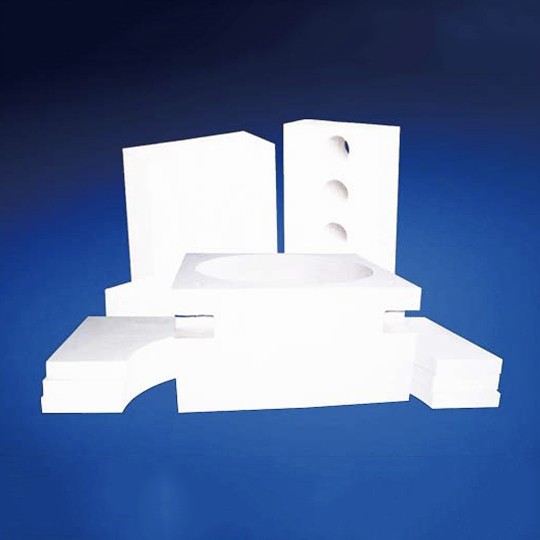
For example, in the production of Ceramic Fiber Shaped Parts, strict standards are followed to ensure the dimensional accuracy and the surface finish of the parts. Similarly, in the manufacturing of Ceramic Fiber Felt and Ceramic Fiber Wool, standards are in place to control the fiber distribution and the thickness of the products.
Quality Control and Certification
To ensure that ceramic fiber products meet the established standards, manufacturers implement comprehensive quality control systems. These systems include in - process inspections, final product testing, and certification procedures.
Manufacturers conduct regular testing of their products using standardized testing methods to verify their compliance with the relevant standards. They also obtain certifications from recognized third - party organizations, such as ISO 9001 for quality management systems and ISO 14001 for environmental management systems.
Conclusion
As a ceramic fiber supplier, I am committed to providing high - quality products that meet or exceed the established standards. By adhering to strict standards for chemical composition, physical properties, mechanical properties, chemical resistance, and manufacturing processes, we ensure that our ceramic fiber products are reliable, effective, and safe for various applications.
If you are in the market for ceramic fiber products and are looking for a reliable supplier, we would be more than happy to discuss your specific requirements. Whether you need Ceramic Fiber Shaped Parts, Ceramic Fiber Felt, or Ceramic Fiber Wool, our team of experts can provide you with the best solutions. Contact us today to start the procurement discussion and find out how our ceramic fiber products can meet your needs.
References
- ASTM International Standards for ceramic materials
- ISO Standards related to thermal insulation materials
- Industry - specific technical literature on ceramic fiber products


