


Hey there! As a supplier of Alumina Ceramic Pipe, I often get asked about the crystal structure of alumina in these pipes. So, I thought I'd take a moment to break it down for you in a way that's easy to understand.
First off, let's talk a bit about alumina itself. Alumina, which is also known as aluminum oxide (Al₂O₃), is a widely used material in the ceramic industry. It's got some pretty amazing properties, like high hardness, excellent wear resistance, and good thermal stability. These properties make it a top choice for all sorts of applications, including our Alumina Ceramic Pipes.
Now, when it comes to the crystal structure of alumina, there are actually several different forms, or polymorphs, that it can take. The most common ones are alpha-alumina (α - Al₂O₃), gamma-alumina (γ - Al₂O₃), and delta-alumina (δ - Al₂O₃). Each of these polymorphs has its own unique crystal structure and set of properties.
Let's start with alpha-alumina. This is the most stable form of alumina at room temperature and atmospheric pressure. It has a hexagonal close-packed (HCP) crystal structure, which means that the oxygen ions are arranged in a hexagonal lattice, with the aluminum ions filling in some of the octahedral and tetrahedral voids between the oxygen ions. This tight packing gives alpha-alumina its high density, hardness, and chemical stability. In fact, alpha-alumina is often used in applications where high wear resistance and chemical inertness are required, such as in cutting tools and chemical processing equipment.
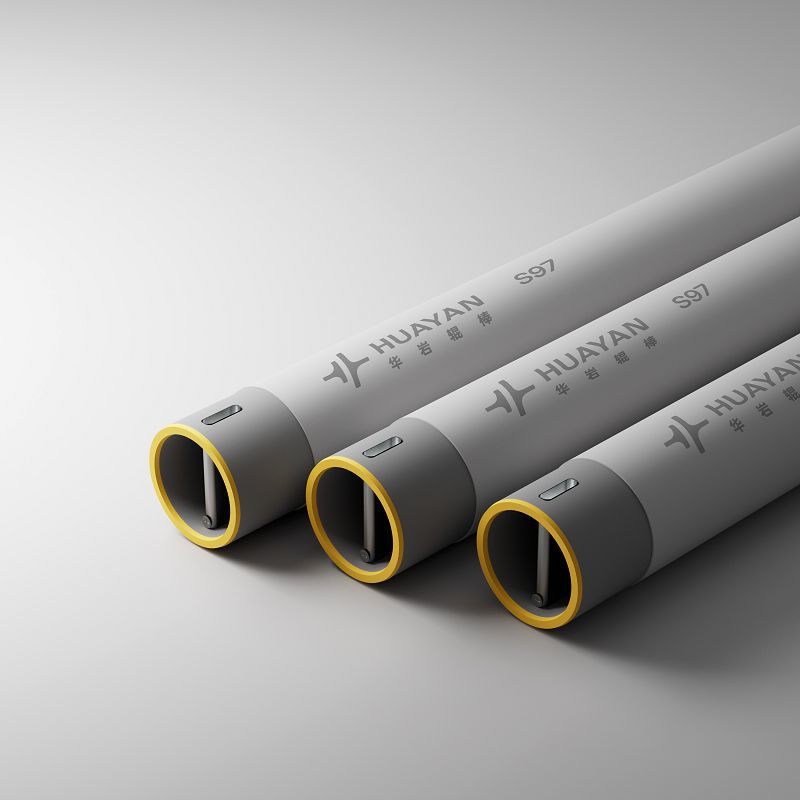
In our Alumina Ceramic Pipes, alpha-alumina is the dominant phase. The high percentage of alpha-alumina in the pipes contributes to their excellent mechanical properties, such as high strength and toughness. This makes the pipes suitable for use in harsh environments, where they may be exposed to high temperatures, abrasion, and chemical corrosion.
Next up is gamma-alumina. This form of alumina has a cubic crystal structure, which is less dense than the hexagonal structure of alpha-alumina. Gamma-alumina is typically formed at lower temperatures and is considered a metastable phase, meaning that it will eventually transform into alpha-alumina if heated to a high enough temperature. Gamma-alumina has a high surface area and is often used as a catalyst support in the chemical industry, as well as in adsorbents and catalysts.

While gamma-alumina is not the main phase in our Alumina Ceramic Pipes, a small amount of it may be present as a secondary phase. The presence of gamma-alumina can have some beneficial effects on the properties of the pipes, such as improving their sinterability and enhancing their surface activity.
Finally, we have delta-alumina. This is another metastable form of alumina that has a tetragonal crystal structure. Delta-alumina is formed at intermediate temperatures between gamma-alumina and alpha-alumina and will also transform into alpha-alumina upon further heating. Like gamma-alumina, delta-alumina is not the primary phase in our Alumina Ceramic Pipes, but it may be present in small amounts.
So, now that you know a bit about the different crystal structures of alumina, you might be wondering how we ensure that our Alumina Ceramic Pipes have the right balance of these phases. Well, it all comes down to the manufacturing process. We use a carefully controlled sintering process to heat the alumina powder to a high temperature, which causes the particles to fuse together and form a dense ceramic material. By controlling the temperature, heating rate, and holding time during the sintering process, we can optimize the formation of the alpha-alumina phase and minimize the presence of other phases, such as gamma-alumina and delta-alumina.
In addition to the crystal structure, the grain size of the alumina in the pipes also plays an important role in determining their properties. Smaller grain sizes generally result in higher strength and better mechanical properties, as the smaller grains can more effectively resist crack propagation. We use advanced powder processing techniques to control the grain size of the alumina in our pipes, ensuring that they have the desired combination of strength, toughness, and wear resistance.
As a supplier of Alumina Ceramic Pipes, we're not just limited to these pipes. We also offer a range of other ceramic products, such as Hollow Alumina Roller, High Alumina Ceramic Tube, and Thermo Ceramic Rollers for Kiln. These products are also made from high-quality alumina ceramics and are designed to meet the specific needs of our customers.
If you're in the market for Alumina Ceramic Pipes or any of our other ceramic products, we'd love to hear from you. Whether you're looking for a standard product or need a custom solution, our team of experts can work with you to find the right product for your application. We're committed to providing our customers with high-quality products, excellent customer service, and competitive prices. So, don't hesitate to get in touch and start a conversation about your ceramic needs.
In conclusion, the crystal structure of alumina in our Alumina Ceramic Pipes is primarily alpha-alumina, which gives the pipes their excellent mechanical and chemical properties. By understanding the different crystal structures of alumina and how they affect the properties of the pipes, you can make an informed decision when choosing the right ceramic product for your application.
References:
- Kingery, W. D., Bowen, H. K., & Uhlmann, D. R. (1976). Introduction to Ceramics. Wiley.
- Carter, W. C., & Norton, M. G. (2013). Ceramic Materials: Science and Engineering. Springer.


