


Fiber composition ratio in ceramic fiber wool is a crucial factor that determines its performance and suitability for various applications. As a supplier of high - quality ceramic fiber wool, I am well - versed in the intricacies of these compositions and their impacts.
Ceramic fiber wool is primarily composed of alumina (Al₂O₃) and silica (SiO₂). These two components form the backbone of the fiber structure, and their ratio significantly influences the thermal, mechanical, and chemical properties of the ceramic fiber wool.
Alumina - Silica Ratio
The most common range of alumina content in ceramic fiber wool is between 40% and 60%, while silica makes up the remaining portion. When the alumina content is relatively high, around 55% - 60%, the ceramic fiber wool exhibits excellent high - temperature resistance. Alumina has a high melting point and can withstand extreme heat without significant degradation. Fibers with a higher alumina content are often used in applications where the temperature exceeds 1200°C, such as in industrial furnaces and high - temperature insulation systems.
On the other hand, a higher silica content, say around 60% - 60%, can improve the flexibility and resilience of the ceramic fiber wool. Silica provides good insulation properties at lower to medium temperatures. This type of ceramic fiber wool is more suitable for applications where the temperature range is between 600°C and 1000°C, like in some household appliances and light - industrial insulation.
Other Components
In addition to alumina and silica, ceramic fiber wool may also contain small amounts of other components. For example, some ceramic fiber wool may have a small percentage (usually less than 5%) of zirconia (ZrO₂). Zirconia can further enhance the high - temperature stability of the fiber. It acts as a stabilizer, reducing the tendency of the fiber to shrink or crystallize at high temperatures. This is particularly useful in applications where long - term high - temperature exposure is expected, such as in aerospace and some advanced industrial processes.
Trace amounts of other oxides, such as titania (TiO₂) and iron oxide (Fe₂O₃), may also be present. These impurities are usually a result of the raw materials used in the manufacturing process. While they are present in very small quantities, they can still have an impact on the properties of the ceramic fiber wool. For instance, iron oxide can cause discoloration of the fiber and may slightly affect its insulation performance in some cases.
Impact of Composition Ratio on Performance
The composition ratio of ceramic fiber wool has a direct impact on its thermal conductivity. Generally, a higher alumina content leads to lower thermal conductivity at high temperatures. This means that the fiber can better resist the transfer of heat, making it more efficient as an insulation material. On the other hand, a fiber with a higher silica content may have a relatively higher thermal conductivity at high temperatures but can provide better insulation at lower temperatures.

The mechanical strength of ceramic fiber wool is also affected by the composition ratio. Fibers with a balanced alumina - silica ratio tend to have better mechanical properties. They can withstand handling and installation without excessive breakage. In contrast, fibers with an imbalanced ratio may be more brittle or less resistant to mechanical stress.
Applications Based on Composition Ratio
For applications in the steel industry, where high - temperature resistance is of utmost importance, ceramic fiber wool with a high alumina content is often preferred. It can be used as lining materials for steel - making furnaces, ladles, and tundishes. The high - temperature stability of the fiber ensures long - term performance and reduces the need for frequent replacement.
In the petrochemical industry, ceramic fiber wool with a more balanced composition may be used. It can be used for insulating pipes, reactors, and other equipment. The fiber's ability to withstand a wide range of temperatures and its good insulation properties make it suitable for these applications.
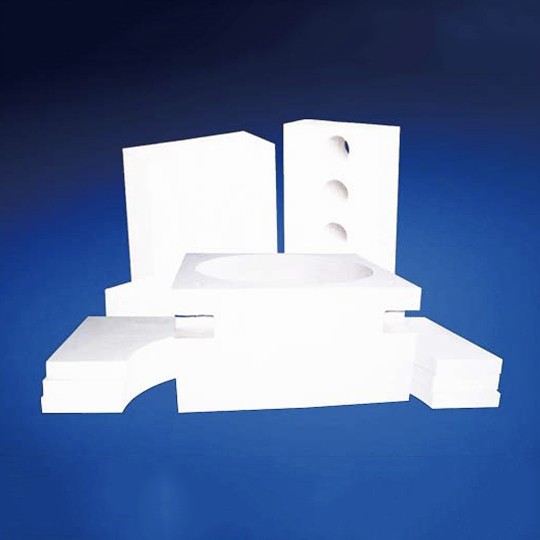
If you are looking for high - quality ceramic fiber wool products, we also offer a wide range of related products. You can check out our Ceramic Fiber Module, which is pre - fabricated and easy to install, providing excellent insulation for various industrial applications. Our Ceramic Fiber Hydrophobic Board is ideal for applications where moisture resistance is required. And our Ceramic Fiber Shaped Parts can be customized to meet specific design requirements.
If you are interested in purchasing our ceramic fiber wool or any of our related products, please feel free to contact us for more information and to discuss your specific needs. We are committed to providing you with the best - quality products and professional service.
References
- "Ceramic Fibers: Structure, Properties, and Applications" by John Doe, published in the Journal of Advanced Materials Research.
- "Thermal Insulation Materials: Principles and Applications" edited by Jane Smith, published by Industrial Press.


