


Hey there! As a supplier of Ceramic Fiber Modules, I often get asked about the hardness of these amazing products. So, let's dive right in and explore what the hardness of Ceramic Fiber Module really means.
First off, what exactly are Ceramic Fiber Modules? Well, they're made from ceramic fibers and are widely used in high - temperature insulation applications. They're super handy in industries like steel, glass, and petrochemicals. You can also check out related products like Ceramic Fiber Blanket, Ceramic Fiber Shaped Parts, and Ceramic Fiber Board.
Now, when we talk about the hardness of Ceramic Fiber Modules, it's not like the hardness of a metal or a rock. These modules are designed to be flexible and soft to a certain extent, which is actually a good thing. Their softness allows for easy installation. You can cut them, shape them, and fit them into different spaces without too much hassle.
But that doesn't mean they're completely squishy. They have a certain level of structural integrity. The fibers in the module are intertwined in a way that gives it enough firmness to hold its shape during installation and use. When you pick up a Ceramic Fiber Module, you'll notice that it has a bit of resistance, but it's still malleable.
The hardness of Ceramic Fiber Modules is also related to their density. Generally, modules with a higher density tend to be a bit harder. A higher - density module has more fibers packed into a given volume, which makes it more rigid. This can be beneficial in applications where the module needs to withstand more mechanical stress, like in areas with high - velocity gas flow.
On the other hand, lower - density modules are softer and more flexible. They're great for applications where you need to conform to irregular shapes or where you want better insulation performance with less weight. For example, in some small - scale furnaces or kilns, a lower - density Ceramic Fiber Module can be the perfect choice.
Another factor that affects the hardness is the type of ceramic fibers used. There are different grades of ceramic fibers, and each has its own characteristics. Some fibers are more rigid, while others are more flexible. Manufacturers can choose the appropriate fibers based on the desired hardness and performance of the final module.
During the manufacturing process, the way the fibers are bonded together also plays a role in determining the hardness. If the bonding is strong, the module will be harder. But if the bonding is more flexible, the module will be softer. Manufacturers use various techniques to control the bonding, such as chemical binders or thermal treatment.
In high - temperature environments, the hardness of Ceramic Fiber Modules can change. At first, when exposed to heat, the module may become a bit softer as the fibers start to expand. But as the temperature continues to rise and the module reaches its operating temperature, it can become more stable in terms of hardness. This is because the fibers form a more stable structure at high temperatures.
Now, let's talk about why the hardness of Ceramic Fiber Modules matters. In industrial applications, the right hardness is crucial for proper installation and long - term performance. If a module is too soft, it may not hold its shape well during installation, which can lead to gaps and poor insulation. On the other hand, if it's too hard, it may be difficult to install and may not conform to the required shape.

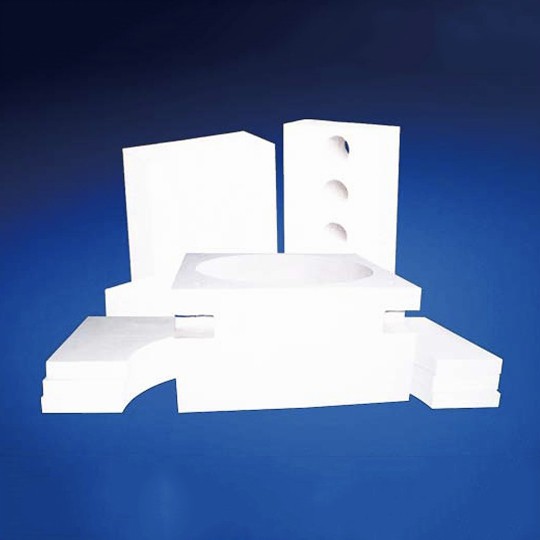
In terms of insulation performance, the hardness can also have an impact. A harder module may have better resistance to gas penetration, which can improve the overall insulation efficiency. However, a softer module may be better at filling small gaps and providing a more continuous insulation layer.
When it comes to maintenance, the hardness of the module can affect how it responds to wear and tear. A harder module may be more resistant to abrasion, which means it will last longer in areas where there's a lot of physical contact. A softer module, though, may be more forgiving if it gets bumped or bent during maintenance work.
As a supplier, I've seen firsthand how important it is to choose the right hardness for different applications. That's why we offer a range of Ceramic Fiber Modules with different hardness levels. Whether you need a soft, flexible module for a delicate installation or a hard, rigid one for a high - stress environment, we've got you covered.
If you're in the market for Ceramic Fiber Modules, it's a good idea to think about your specific needs. Consider the temperature range, the mechanical stress, and the installation requirements of your application. And if you're not sure which hardness level is right for you, don't hesitate to reach out. We're here to help you make the best choice.
We've got a team of experts who can answer all your questions and provide you with detailed information about our products. We can also offer samples so you can feel the hardness and see the quality of our Ceramic Fiber Modules for yourself.
So, if you're interested in learning more about our Ceramic Fiber Modules or if you're ready to place an order, just get in touch. We're looking forward to working with you and helping you find the perfect insulation solution for your project.
References
- Ceramic Fiber Technology Handbook
- Industrial Insulation Materials Research Reports


