


Hey there! As a supplier of Alumina Ceramic Tubes, I often get asked about how these nifty tubes react with acids. It's a question that's not only interesting from a scientific standpoint but also crucial for those who use these tubes in various industrial applications. So, let's dive right in and explore this topic in detail.
What Are Alumina Ceramic Tubes?
First off, let me give you a quick rundown on what Alumina Ceramic Tubes are. These tubes are made from alumina, which is a ceramic material known for its high hardness, excellent thermal stability, and good electrical insulation properties. Alumina comes in different purity levels, and the higher the purity, the better the performance of the ceramic tube.
We use advanced manufacturing techniques to produce Alumina Ceramic Tubes with precise dimensions and smooth surfaces. These tubes can be found in a wide range of industries, including electronics, chemical processing, and metallurgy. They're used for things like protecting electrical wires, as reaction vessels in chemical processes, and even in high-temperature furnaces.
How Do Acids React with Alumina Ceramic Tubes?
Now, let's talk about how acids interact with Alumina Ceramic Tubes. The reaction between alumina and acids depends on several factors, such as the type of acid, its concentration, and the temperature.
Strong Acids
Strong acids, like hydrochloric acid (HCl), sulfuric acid (H₂SO₄), and nitric acid (HNO₃), can react with alumina under certain conditions. At room temperature, the reaction is usually very slow. However, as the temperature increases, the reaction rate speeds up.
For example, when alumina reacts with hydrochloric acid, the following reaction occurs:
Al₂O₃ + 6HCl → 2AlCl₃ + 3H₂O
This reaction forms aluminum chloride (AlCl₃) and water. The aluminum chloride can dissolve in the acid solution, which means that over time, the Alumina Ceramic Tube can start to dissolve.
Sulfuric acid reacts with alumina in a similar way:
Al₂O₃ + 3H₂SO₄ → Al₂(SO₄)₃ + 3H₂O
Here, aluminum sulfate (Al₂(SO₄)₃) is formed. The solubility of aluminum sulfate in sulfuric acid depends on the concentration of the acid and the temperature.
Weak Acids
Weak acids, such as acetic acid (CH₃COOH), react with alumina much more slowly than strong acids. At room temperature, the reaction is almost negligible. Even at elevated temperatures, the reaction rate is still relatively low.
This is because weak acids don't dissociate completely in water, which means there are fewer hydrogen ions (H⁺) available to react with the alumina. As a result, Alumina Ceramic Tubes are generally more resistant to weak acids compared to strong acids.
Factors Affecting the Reaction
As I mentioned earlier, the reaction between alumina and acids is influenced by several factors. Let's take a closer look at these factors:
- Concentration of the Acid: The higher the concentration of the acid, the more reactive it is. This means that a concentrated acid will react with the Alumina Ceramic Tube faster than a dilute acid.
- Temperature: Increasing the temperature speeds up the reaction rate. This is because higher temperatures provide more energy to the reactant molecules, allowing them to overcome the activation energy barrier more easily.
- Purity of the Alumina: Higher purity alumina is generally more resistant to acid attack. Impurities in the alumina can act as sites for the acid to react, which can accelerate the corrosion process.
Applications and Considerations
Given the reaction between Alumina Ceramic Tubes and acids, it's important to consider these factors when using these tubes in acid-containing environments.

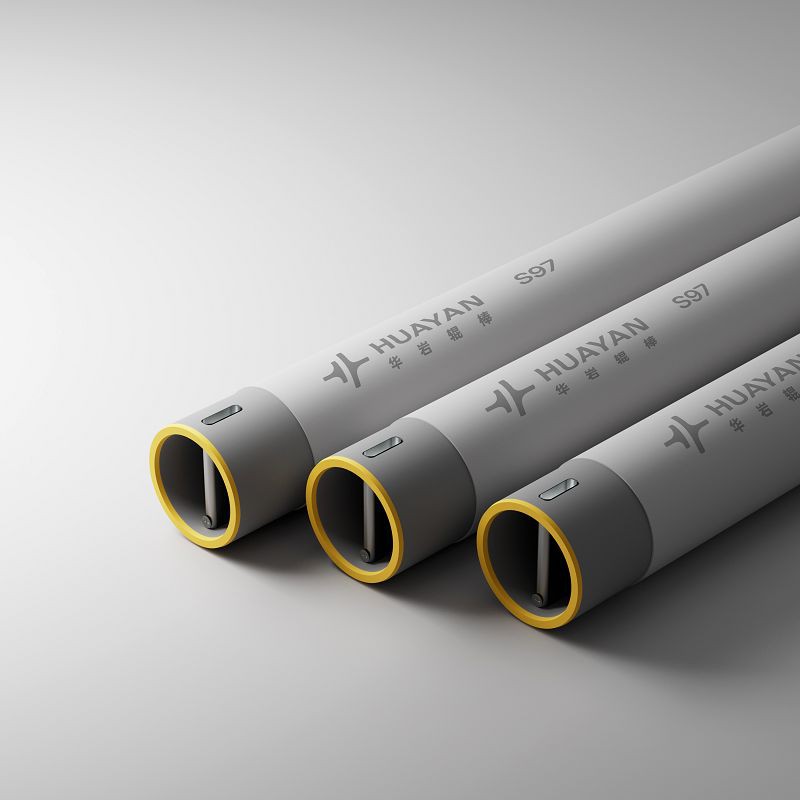
In some applications, such as chemical processing plants, Alumina Ceramic Tubes may be exposed to acids. If the acid is a strong acid and the temperature is high, it's crucial to choose a tube with high purity alumina and to monitor the condition of the tube regularly.
On the other hand, if the acid is a weak acid or the temperature is low, Alumina Ceramic Tubes can provide excellent resistance. For example, in some laboratory settings where weak acids are used, these tubes can be a great choice for containing and transporting the acid.
Other Products in Our Lineup
In addition to Alumina Ceramic Tubes, we also offer a range of other high-quality ceramic products. Check out our Hollow Alumina Roller, which is widely used in the glass industry for its excellent thermal and mechanical properties. We also have Microcrystalline Alumina Ball, which are great for grinding and polishing applications. And if you're in the tile industry, our Thermal Ceramic Roller for Tiles Kiln is a must-have for efficient and reliable kiln operation.
Conclusion
So, there you have it! That's how Alumina Ceramic Tubes react with acids. As you can see, the reaction is complex and depends on several factors. But with the right knowledge and proper selection of the tube, you can use Alumina Ceramic Tubes in a wide range of acid-containing environments.
If you're interested in purchasing Alumina Ceramic Tubes or any of our other products, feel free to reach out to us for more information and to start a procurement discussion. We're here to help you find the best ceramic solutions for your needs.
References
- "Ceramics Science and Technology" by R. Steinbrech and P. Greil
- "Handbook of Advanced Ceramics" edited by S. Somiya


