


Hey there! As a supplier of Ceramic Fiber Blanket, I often get asked how it stacks up against vermiculite insulation. In this blog, I'll break down the key differences and similarities between these two insulation materials to help you make an informed decision.
1. Basics of Ceramic Fiber Blanket and Vermiculite Insulation
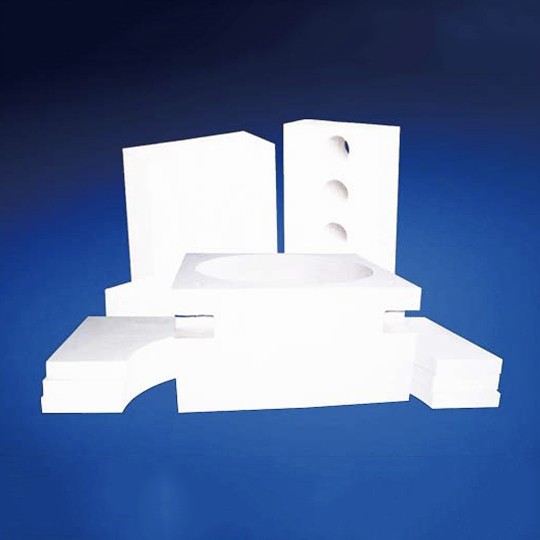
Let's start with the basics. Ceramic Fiber Blanket is made from ceramic fibers that are formed into a flexible, lightweight blanket. It's known for its excellent thermal insulation properties, high temperature resistance, and low thermal conductivity. You can check out some related products like Ceramic Fiber Shaped Parts, Ceramic Fiber Wool, and Ceramic Fiber Semi - rigid Board on our website.
On the other hand, vermiculite insulation is made from a naturally occurring mineral called vermiculite. When heated, vermiculite expands into a lightweight, worm - like structure. It has been used for insulation purposes for a long time due to its good insulating properties, fire resistance, and low cost.
2. Thermal Insulation Performance
When it comes to thermal insulation, both Ceramic Fiber Blanket and vermiculite insulation do a pretty good job. However, Ceramic Fiber Blanket has a slight edge. Its low thermal conductivity means it can prevent heat transfer more effectively. This is especially important in high - temperature applications, such as industrial furnaces, kilns, and fireplaces.
Vermiculite insulation also provides decent thermal insulation, but it may not be as efficient as Ceramic Fiber Blanket in extremely high - temperature environments. The maximum service temperature of vermiculite insulation is usually around 1000 - 1200°F (538 - 649°C), while Ceramic Fiber Blanket can withstand temperatures up to 2300°F (1260°C) or even higher, depending on the type.
3. Fire Resistance
Fire resistance is a crucial factor in insulation materials, and both Ceramic Fiber Blanket and vermiculite insulation are fire - resistant. Ceramic Fiber Blanket is non - combustible and does not contribute to the spread of fire. It can act as a barrier to prevent flames from spreading and protect surrounding structures.
Vermiculite insulation is also fire - resistant. It won't burn or support combustion, which makes it a safe choice for many applications. However, if there are any impurities in the vermiculite, it could potentially affect its fire - resistance properties. In contrast, Ceramic Fiber Blanket is more consistent in its fire - resistant performance.
4. Installation and Handling
Ceramic Fiber Blanket is very flexible and easy to install. It can be cut to size with a sharp knife and easily wrapped around pipes, ducts, or other objects. It can also be installed in layers to increase the insulation thickness. However, when handling Ceramic Fiber Blanket, you need to wear appropriate protective gear, such as gloves and a mask, because the fibers can be irritating to the skin, eyes, and respiratory system.
Vermiculite insulation is usually installed by pouring or blowing it into the desired space. It can fill irregularly shaped areas easily. One of the advantages of vermiculite insulation is that it doesn't require special tools for installation. However, like Ceramic Fiber Blanket, you should also take precautions when handling vermiculite, especially if there is a risk of asbestos contamination. Some older vermiculite products may contain asbestos, which is a known carcinogen.
5. Weight and Density
Ceramic Fiber Blanket is extremely lightweight. Its low density makes it easy to transport and install, especially in applications where weight is a concern, such as in aerospace or automotive industries. This also means that it puts less stress on the structures it is insulating.

Vermiculite insulation is also relatively lightweight, but it is generally denser than Ceramic Fiber Blanket. This can be a disadvantage in some applications where weight needs to be minimized.
6. Cost
Cost is always an important consideration. Vermiculite insulation is generally cheaper than Ceramic Fiber Blanket. The raw materials for vermiculite are more abundant, and the manufacturing process is relatively simple. This makes it a popular choice for budget - conscious consumers.
However, when you consider the long - term cost, Ceramic Fiber Blanket may be more cost - effective. Its better thermal performance means it can save energy in the long run, which can offset the initial higher cost. Also, its longer service life and better resistance to high temperatures can reduce the need for frequent replacements.
7. Environmental Impact
In terms of environmental impact, both materials have their pros and cons. Ceramic Fiber Blanket is made from synthetic materials, and the manufacturing process may consume a significant amount of energy. However, it is non - toxic and does not release harmful substances during normal use.
Vermiculite insulation is a natural material, which is a plus from an environmental perspective. But as mentioned earlier, some vermiculite products may contain asbestos, which is a major environmental and health concern. If you choose vermiculite insulation, make sure it is asbestos - free.
8. Moisture Resistance
Ceramic Fiber Blanket is relatively resistant to moisture. It does not absorb water easily, which means it won't lose its insulating properties due to moisture. This is important in applications where there is a risk of water exposure, such as in some industrial processes or outdoor installations.
Vermiculite insulation, on the other hand, can absorb moisture. When it gets wet, its insulating performance can be significantly reduced. Also, the absorbed moisture can cause the vermiculite to settle and lose its effectiveness over time.
9. Durability
Ceramic Fiber Blanket is quite durable. It can maintain its shape and insulating properties over a long period, even in harsh environments. It is resistant to chemical corrosion, which is important in industrial settings where there may be exposure to various chemicals.
Vermiculite insulation is also durable, but it may be more prone to damage from mechanical stress. For example, if it is compressed or vibrated, the vermiculite particles may break down, reducing its insulating effectiveness.
10. Applications
Ceramic Fiber Blanket is widely used in high - temperature industrial applications, such as in steel mills, glass factories, and power plants. It is also used in the aerospace and automotive industries for thermal insulation. Additionally, it can be used in residential fireplaces and wood - burning stoves for better heat retention.
Vermiculite insulation is commonly used in residential attics, walls, and crawl spaces. It is also used in some industrial applications where high - temperature performance is not the primary concern, such as in some building insulation and packaging.
Conclusion
So, which one should you choose between Ceramic Fiber Blanket and vermiculite insulation? It depends on your specific needs. If you need high - temperature insulation, better thermal performance, and long - term durability, Ceramic Fiber Blanket is the way to go. On the other hand, if you are on a tight budget and need insulation for a relatively low - temperature application, vermiculite insulation may be a suitable choice.
If you're interested in our Ceramic Fiber Blanket products or have any questions about insulation materials, feel free to reach out to us. We're here to help you find the best insulation solution for your project.
References
- ASTM International standards for insulation materials
- Industry reports on insulation products
- Research papers on thermal insulation and fire - resistant materials


